
Welcome back to the seventh newsletter and by the time this is published, approximately 6 months of fraserdarcy.com/coaching will have been around. Nice little milestone. As a recap of the first 6 months to start with here are the main topics covered in the first 6 coaching newsletters:
- #1 – FinalSurge explainer
- #2 – Heart rate analysis and total kilometres
- #3 – Race week
- #4 – Zones, RPE, Injury prevention
- #5 – 4 pillars of performance
- #6 – Fuelling, planning
This newsletter I won’t be covering any of those topics, we’ll be breaking new ground and getting ‘dirty’.
Agenda:
- Trail running
- Strength training
- Cross-training
Trail running. What is it. What is it good for. Why should you do it. Why you shouldn’t do it. Lots to unpack. Starting with what it is. I define trail running as anything that’s not your regular run of the mill road run or lap around the burbs. If that regular route you always do involves a nice trail of gravel or crushed dirt, it’s not really trail running in my eyes. Even running in parts of Belair I wouldn’t really call trail running. There are nice roads, nice paths and it’s mostly flat. The true essence of trail running is going to places to run where roads won’t get you. The tops of mountains, alongside rivers, crossing valleys. On those types of trails you’ll be stepping on uneven surfaces, going up and down relentless hills and having to contend with route-finding and decision making along with enjoying nature at it’s best.
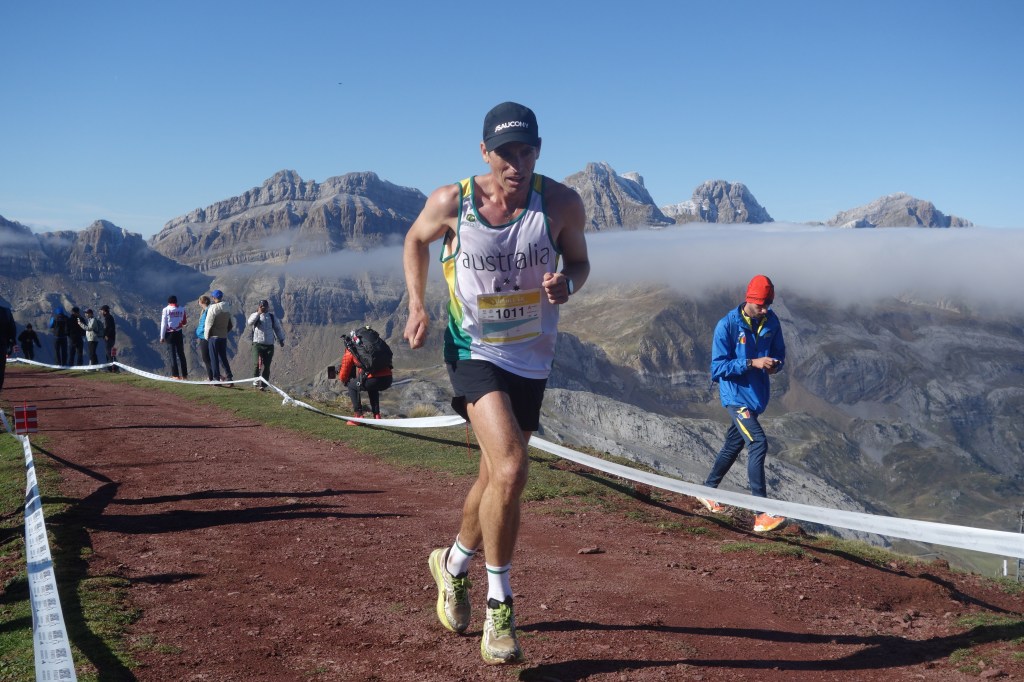
Because of those variety of factors that make up trail running it is inherently good for you as it both challenges you physically to adapt, more so than a general flat road does, and also challenges you and enriches you mentally and spiritually. Physically speaking, the change in mechanics and the proprioception practiced when running on uneven terrain is a free strength training workout turning on different muscles you wouldn’t normally use. If you can strengthen these little areas better then they will support the big muscles you do use when road running. Physiologically, the energy demands of running uphill challenge you more so than running on the flat as well. But you don’t have the mechanical cost. So in essence, you can get free threshold training when running uphill on trails (but you don’t need a trail to find hills as well by the way, this fact also applies to road hills). Mentally and physically speaking everyone is generally more at peace, happy, engaged in their training as well if they are running in a nice trail running area. So, it reasons that if you train on trails you are more likely to do more training (thus getting better) and also extend your training (thus getting better as well). Pretty good reasons so far for why you should do it.
Another reason I’ll throw in there in it’s own paragraph is that trail running can broaden your horizon of how you participate in the sport of running. You may find you enjoy it (great!) or it might reveal that you really enjoy road running instead and it makes you more grateful. Trail running can also be a great reason to go for a drive to a new place with different trails that might not offer what you have around you.

So if everything is so good about trail running, what are some reasons not to trail run? Well it can be risky. If you have weak ankles and other body parts there are some trails that will downright be too ridiculous for you in the beginning to enjoy it. That’s ok, work up to it. Sometimes trail running is also a long drive away from you. That’s kind of counter productive to the whole ‘trails are good so you will do more training‘ argument. If it takes you 0.1s to run outside your house but 1hr to drive to trails and you only have 1hr to run then it makes sense to just maximise your efficiency and run at home. Trails can also be too sandy, too steep, too wet, too muddy, too single track and sometimes you just need a good road to run and clear your head without overthinking it. Other times it can be actually pretty silly to go out trail running if the trails are on fire or if it is really dark, cold and wet and you only have a t-shirt. Be smart, not silly when it comes to trail running and you will enjoy it.
How do I recommend you enjoy it? Start with easy runs and run to time, not distance, as directed on your program. If there is no time on FinalSurge but you usually run 10km in 60 minutes, then use your noggin and make an educated guess either way. Your pace will be slower on the trails. That’s ok. Next, I’d start incorporating some trails/road into your long runs. That’s glorified long easy running. After that, if you want to do a session on the trails I’d start with hill repeats, threshold/tempo and then strides. Hill repeats are an obvious one, threshold/tempo is great on uphills or undulating flatter tracks and strides are great because it can be really fun to fly down a 3-5% gradient fire track. Feels a bit nicer to try and run fast on a trail than a road sometimes. Of course, if you’re a trail runner then you will have deemed the last few paragraphs as preaching to the converted. Great. Take this as a reminder to take a non trail running friend onto the trails.

A personal anecdote about trail running and how it fits into my own training to finish this topic. I use it for very easy recovery runs as it keeps them slow and means I get the training benefit whilst also getting a free massage/loosener for some overused muscles. I often get hip issues and there is a direct correlation showing the more I run on trails the less I get these types of hip issues or any injury issue in general. I also use trail running as a way to go for a run without having to dodge cars. That part of road running frustrates me. I use trail running for a destination point in my long run (i.e. I’ll run 60minutes to a trail, do a loop, then run back on the road). Finally I use trail running when I’m training for a trail race. In a perfect world I’d probably run on trails 50% of the time. Historically I have had phases where I ran on trails 100% of the time (2010’s) and they were some of my most enjoyable running years.
Strength Training. I am not a strength coach. If you want one of those go and see my sister’s partner Thomas Moore at Built. He’s very good (not that I’ve seen him or any other strength coaches before but that’s what I’ve heard). Anyway, the point is I am outside my scope here by talking about strength training and am only going to share what I know and have experienced. I have had periods in my running where I have had:
- Zero strength training
- A little amount of body weight and light dumbells as my strength training
- 2-3 weekly sessions of heavy strength training
All three periods have resulted in me setting PB’s, winning races and running well. The periods where I have done only a little amount of strength training has generally coincided with where I run on trails or focus on downhills. I have developed overuse injuries during all three periods so that kind of defeats the argument that most people say ‘strength training prevents injuries’. It does, but if you’re someone like me who likes to always push training then you are going to get injured no matter what you do. It’s how you manage those injuries or niggles which results in whether you actually need to stop running or not.
The happy medium I have found with strength training is finding a routine that works for you and is easy to complete 2-3 times a week. If that means heavy strength training at a commercial gym because the accountability of having a membership means you actually do it, great. If you’re more like me and are happy to cancel a gym membership because you’re not using it then you might be better off with a simple bodyweight routine at home that takes 15 minutes. My routine at the moment consists of:
- Planks and sit ups for my core (~4 minutes worth)
- Single leg squats (bulgarians) or single leg backwards lunges
- Double leg squats
- Step-ups
- Calf raises
- A variety of ‘kettlebell’ type exercises involving a moderately weighted dumbell
- Some bar hangs
I do a variety of these exercises in a circuit, maximising the time I have and also just getting it done quickly. If I have 1.5hrs to train I will rather use 1.25hrs to run and .25 hrs to do these exercises than 1hr to run and 0.25 to do these exercises and 0.25hrs to sit around in between the exercises because some expert said that was a good idea. I can find you another expert who says the exact opposite generally.
So that’s my routine and on the days I don’t do this I enjoy not doing it, or I do some strides at the end of my run or I really focus on my stretching (but I stretch after every run, partly because it regulates me back into ‘normal’ life after ‘running’ life). If you don’t have a strength training routine already maybe try starting with this, and if you already do and were hoping for more concrete direction, I’m sorry to disappoint. As long as you are enjoying your strength training, it’s not adding unnecessary bulk and you are increasing either the capacity or the durability of your muscles and tendon’s then keep doing it. There are some good studies that show strength training improves the release of all the chemicals and hormones that athletes illegally ‘dope’ with as well as the obvious benefits of increasing your strength and neuromuscular connection for your running. As for days on which to do it, personal preference is the best guide.
Cross-training. Swimming, cycling, elliptical, walking are the big ones. They are all supplementary to your running and my main advice is to max out as much running as you can each week. If you want to do more running volume, then tell me! If you can’t because you don’t enjoy the monotony of it (have you tried trail running?) or there are other reasons why that’s cool, maybe you just like cycling and the elliptical just as much! Whatever you enjoy and keeps you being active for the long term is great! When it comes to these different cross-training modalities the elliptical translates the best to running and can be used interchangeably. If you have an easy run programmed but are feeling sore, then do the same minutes on an elliptical. If you have a session programmed, there is generally a good cross-over onto an elliptical.
For the bike, it may actually serve as a better way to enhance your durability and get some extra free threshold training. With no impact, you can cycle for hours and train your heart and nervous system to produce an effort far longer than you could on a long run. Couple a long ride with a run and you get the neuromuscular benefits of running with the physiological demand of cycling. BUT, it still pays to focus on your running! Cycling will always be supplementary. If you wish to add cycling to your training then the general rule is ‘go for it, so long as it doesn’t come at the expense of any of your running’. The same applies to swimming but there is far less cross over there in terms of your fitness. And I also don’t understand swimming training that well (I struggle to swim 1000m so I am not the most educated person to ask).

I put walking on the cross-training list of things to talk about because I think a morning walk or an evening walk are great ways to fit in a little bit of stress free exercise that runners often forget about. If every time you leave the house is for a run you are missing out on just strolling the neighbourhood and really soaking things up. Plus, if you are coming back from a niggle or unsure how one might feel, go for a walk. If it feels good, try a little jog 20 minutes into your walk. Adding in some walk breaks to your first run or several runs back is a great way to also extend these sessions and allow you to reassess at every walk break if things are going ok. Plus, walking is a great way to break up a marathon. Similarly, anyone training for a 100km race needs to practice their hiking and walking of course! Doing some hiking with a 15kg rucksack is also great strength training and endurance training. For about 10 years I worked as an intermittent bushwalking instructor and my legs can sometimes feel bulletproof because of that training history in them.
AOB: So in summary, this newsletter’s main topics have been about trail running, strength training and cross training. They are important topics to be on top of if you want to get the most out of your running and exercise journey as an adult. I’m sure as we all get older, we will do less running but possibly more strength training and cross training so it pays to form a good relationship with it now!
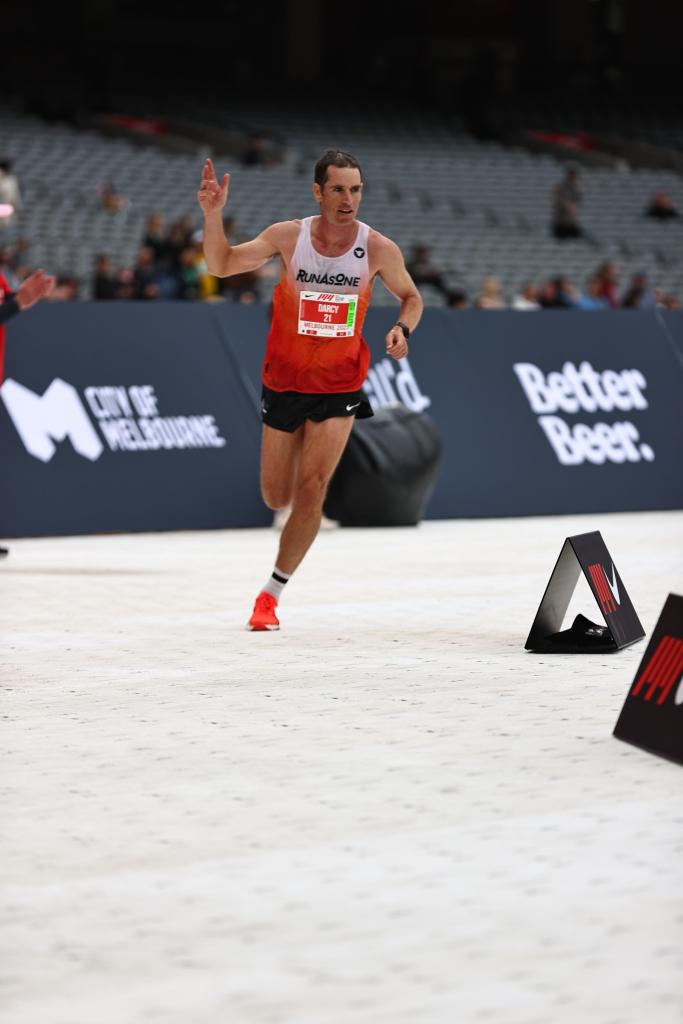
Also, it’s Melbourne Marathon weekend this weekend so good luck to anyone racing which also includes me. I’ll be aiming for a PB (2:17:38 is my official PB and the time I ran at Melbourne last year) and the weather looks great. There’s a host of big names in the race and if you want a more detailed breakdown sign up to the FTK Patreon for more information (that’s a plug for FTK who I do some work for by the way…). The implication for me running Melbourne Marathon is that I might be a bit slow on replying to queries/comments on FinalSurge this weekend and again into next week (I’m driving back Monday and then should be back in the office on Tuesday).
That’s it though for this newsletter. I hope you reflect on how you practice either of these three topics in your running. The next topic I am going to focus on is a review/reflection of the first six months of coaching plus some other tidbits about coaching and running that I think will help. Thanks for reading!


Leave a comment